




English
What to Expect?
- Written Skills Workbook: Each lesson will include a component of completing a staged written notebook aimed at developing students’ written skills. Each worksheet targets specific written skills such as sentence structure variation, worldbuilding, syntax, and grammar needed to develop English proficiency.
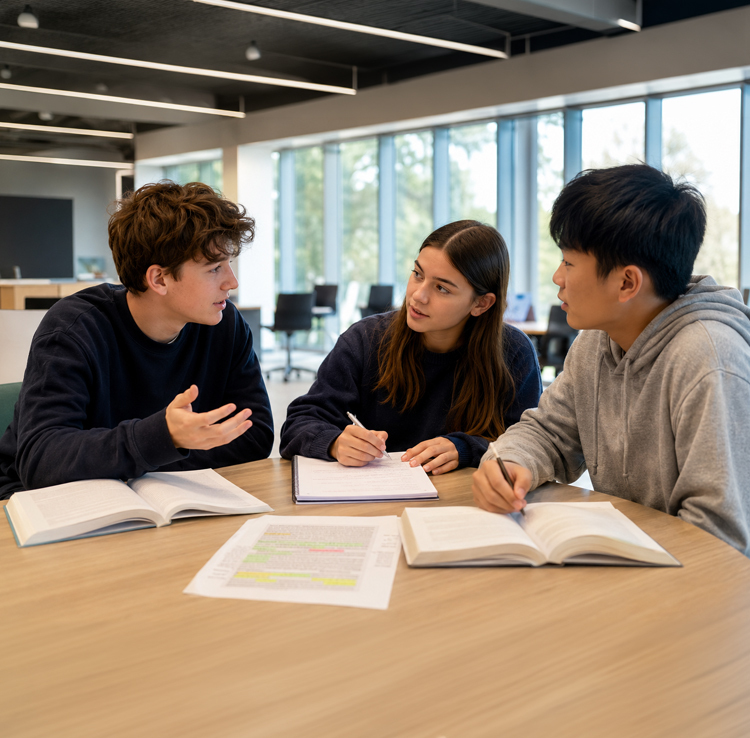
- Bring-Your-Own-Text Application: Classes are structured with dedicated time for each student to apply skills learned in the lesson directly to the texts they are studying. This enables immediate application of conceptual understanding and skills and provides students the opportunity to get tailored assistance and feedback from their Mentors. Turning enrichment learning into an immediate, visible improvement in their classwork and assessments.
- Analytical and Creative Development: Lessons include mini analytical and creative investigations that build the synthesis, comparative thinking, and independent reasoning skills students need for school depth studies and extended responses — laying the groundwork for the more rigorous demands of Stage 6.
- Lifelong Skill Development: As students progress through high school, classes build the stamina and technique students need for unseen texts, essays, and formal assessment tasks – not just understanding, but the ability to perform under exam conditions.
Why is it beneficial?
English teaches communication skills that outlast a student’s time at school. The ability to understand different perspectives and apply conceptual frameworks to interdisciplinary problems will set students apart in future study and in the workplace. Our program also builds a strong conceptual and technical foundation for Stage 6, supporting continued growth in Years 11 and 12 and contributing to success in the HSC.
At Sypher Space, we focus on setting students up for lifelong success – teaching the transferable skills that build future employability and a genuine, lasting interest in learning. We ground complex literary techniques in real-world contexts and examples, while creating space for collaboration and conversation, so students can develop and articulate their own thoughts and opinions.
Year 7
Term 1: Reading Between the Lines
- Discovery of key themes and inferences with a focus on finding key literary evidence across a range of texts.
- NESA Focus Area: Understanding and Responding to Texts.
- Exemplar Text Types: Short stories & Poems.
- BYOT Application Exemplar Task: Annotate 3 quotes from their class text and explain what each implies to the class.
Term 2: Analytical Paragraph Writing
- Expressing ideas and composing arguments using PETAL and TEEL.
- NESA Focus Area: Expressing ideas & Composing Texts.
- Text Types Exemplar: Discursive Articles and Unseen text extracts.
- BYOT Application Exemplar Task: Write one PETAL paragraph analysing motifs in their class text.
Term 3: Craft of Writing
- Developing story structure, personal voice and creative technique.
- NESA Focus Area: Expressing Ideas and Composing Texts.
- Text Types Exemplar: Film, Short-film and flash fiction.
- BYOT Application Exemplar Task:Rewrite or extend a scene from their class text in a new style/voice.
Term 4: Observing the Visual World
- Film, Image and Multimodal analysis.
- NESA Focus Area: Reading, Viewing and Listening to Texts.
- Text Types Exemplar: Short films & Images.
- BYOT Application Task:Compare one visual technique in a film to a technique in their class text.
Year 8
Term 1: Language under the microscope
- Learn about figurative language, tone and characterisation.
- NESA Focus Area: Understanding and responding to texts.
- Text Types Exemplar:Poetry & Short Stories.
- BYOT Application Exemplar Task: Identify and analyse 3 language techniques in their class text .
Term 2: Building a Paragraph
- Structuring multi-paragraph analysis.
- NESA Focus Area: Express ideas and composing texts.
- Text Types Exemplar: Unseen thematic extracts.
- BYOT Application Exemplar Task: Draft a 3-paragraph analytical response using their class text.
Term 3: The Power of Persuasion
- Crafting an argument, persuasive texts and debating .
- NESA Focus Area: Expressing ideas and composing texts.
- Text Types Exemplar: Speeches and Opinion-based articles.
- BYOT Application Exemplar Task:Write a persuasive piece connecting an issue/theme in their class text to a real-world issue.
Term 4: Contextualisation of Texts
- Exploring how context shapes the crafting of a text.
- NESA Focus Area: Understanding and responding to texts.
- Text Types Exemplar: Shakespeare and a comparative film excerpt.
- BYOT Application Exemplar Task:Compare their class text’s treatment of a theme to a house text on the same theme.
Year 9
Term 1: Context and Values
- How does context embed certain values into texts, shaping their universality?
- NESA Focus Area: Understanding and responding to texts.
- Text Types Exemplar:Text from different contexts/eras.
- BYOT Application Exemplar Task: Analyse how context shapes meaning in their class text.
Term 2: Thesis Crafting
- Building a sustained analytical argument.
- NESA Focus Area: Expressing ideas and composing texts.
- Text Types Exemplar: Model essays and thematic extracts.
- BYOT Application Exemplar Task: Write 3 thesis statements for their class text.
Term 3: Finding your Voice
- Creative writing style and craft.
- NESA Focus Area:Expressing ideas and composing texts.
- Text Types Exemplar: Literary short fiction, memoir extracts.
- BYOT Application Exemplar Task:Write a creative piece inspired by a technique/theme in their class text .
Term 4: Cracking the unseen text
- Exam-style reading and analysis.
- NESA Focus Area:Understanding and responding to texts.
- Text Types Exemplar:Unseen prose, poetry and non-fiction.
- BYOT Application Exemplar Task:Apply the same analytical method to an unseen extract from their class text’s genre.
Year 10
Term 1: Synthesis and Sophistication
- Connecting themes across texts.
- NESA Focus Area:Understanding and responding to texts.
- Text Types Exemplar:Unseen prose, poetry and film.
- BYOT Application Exemplar Task:Synthesise 2+ themes across their class text.
Term 2: Writing with conviction
- Discursive and persuasive composition.
- NESA Focus Area: Expressing ideas and composing texts.
- Text Types Exemplar: Discursive essays, opinion pieces.
- BYOT Application Exemplar Task: Write a full extended response on their class text using discursive techniques.
Term 3: Accelerated Craft of Writing
- Developing fundamental skills in anticipation of Module C: Craft of Writing taught in Year 11 and 12.
- NESA Focus Area:Expressing ideas and composing texts.
- Text Types Exemplar: Varied stimulus (image, quote, scenario).
- BYOT Application Exemplar Task:Craft a reflection connecting crafting choices from the stimulus with your class text’s style.
Term 4: Texts, Truths and Human Experience
- Focuses on timed responses to unseen texts and comprehension, giving students accelerated preparation for the Common Module component that features across all HSC English exams..
- NESA Focus Area:Reading, viewing and listening to texts.
- Text Types Exemplar:Times unseen extracts (mixed genres).
- BYOT Application Exemplar Task:Timed practice response using an unseen extract in the same genre/mode as their class text .
Sessions Times
Please click here for up to date session times.
Where you find us
Why this program?
- Classes structured around the NESA syllabus with a focus on understanding and composing multimodal texts.
- Emphasis on conceptual learning of texts to enrich students’ understanding of how language and canonical themes shape themselves and the world around them.
- Develop writing skills across creative, persuasive, discursive, and analytical writing with a focus on syntax and grammar.
- Work on developing students’ genuine interest in English and its many future study and career pathways.
Meet Your Mentor
 Rizana
 Sanaaya
English
What to Expect?
- Written Skills Workbook: Each lesson will include a component of completing a staged written notebook aimed at developing students’ written skills. Each worksheet targets specific written skills such as sentence structure variation, worldbuilding, syntax, and grammar needed to develop English proficiency.
- Bring-Your-Own-Text Application: Classes are structured with dedicated time for each student to apply skills learned in the lesson directly to the texts they are studying. This enables immediate application of conceptual understanding and skills and provides students the opportunity to get tailored assistance and feedback from their Mentors. Turning enrichment learning into an immediate, visible improvement in their classwork and assessments.
- Analytical and Creative Development: Lessons include mini analytical and creative investigations that build the synthesis, comparative thinking, and independent reasoning skills students need for school depth studies and extended responses — laying the groundwork for the more rigorous demands of Stage 6.
- Lifelong Skill Development: As students progress through high school, classes build the stamina and technique students need for unseen texts, essays, and formal assessment tasks – not just understanding, but the ability to perform under exam conditions.
Why is it beneficial?
English teaches communication skills that outlast a student’s time at school. The ability to understand different perspectives and apply conceptual frameworks to interdisciplinary problems will set students apart in future study and in the workplace. Our program also builds a strong conceptual and technical foundation for Stage 6, supporting continued growth in Years 11 and 12 and contributing to success in the HSC.
At Sypher Space, we focus on setting students up for lifelong success – teaching the transferable skills that build future employability and a genuine, lasting interest in learning. We ground complex literary techniques in real-world contexts and examples, while creating space for collaboration and conversation, so students can develop and articulate their own thoughts and opinions.
Year 7
Term 1: Reading Between the Lines
- Discovery of key themes and inferences with a focus on finding key literary evidence across a range of texts.
- NESA Focus Area: Understanding and Responding to Texts.
- Exemplar Text Types: Short stories & Poems.
- BYOT Application Exemplar Task: Annotate 3 quotes from their class text and explain what each implies to the class.
Term 2: Analytical Paragraph Writing
- Expressing ideas and composing arguments using PETAL and TEEL.
- NESA Focus Area: Expressing ideas & Composing Texts.
- Text Types Exemplar: Discursive Articles and Unseen text extracts.
- BYOT Application Exemplar Task: Write one PETAL paragraph analysing motifs in their class text.
Term 3: Craft of Writing
- Developing story structure, personal voice and creative technique.
- NESA Focus Area: Expressing Ideas and Composing Texts.
- Text Types Exemplar: Film, Short-film and flash fiction.
- BYOT Application Exemplar Task:Rewrite or extend a scene from their class text in a new style/voice.
Term 4: Observing the Visual World
- Film, Image and Multimodal analysis.
- NESA Focus Area: Reading, Viewing and Listening to Texts.
- Text Types Exemplar: Short films & Images.
- BYOT Application Task:Compare one visual technique in a film to a technique in their class text.
Year 8
Term 1: Language under the microscope
- Learn about figurative language, tone and characterisation.
- NESA Focus Area: Understanding and responding to texts.
- Text Types Exemplar:Poetry & Short Stories.
- BYOT Application Exemplar Task: Identify and analyse 3 language techniques in their class text .
Term 2: Building a Paragraph
- Structuring multi-paragraph analysis.
- NESA Focus Area: Express ideas and composing texts.
- Text Types Exemplar: Unseen thematic extracts.
- BYOT Application Exemplar Task: Draft a 3-paragraph analytical response using their class text.
Term 3: The Power of Persuasion
- Crafting an argument, persuasive texts and debating .
- NESA Focus Area: Expressing ideas and composing texts.
- Text Types Exemplar: Speeches and Opinion-based articles.
- BYOT Application Exemplar Task:Write a persuasive piece connecting an issue/theme in their class text to a real-world issue.
Term 4: Contextualisation of Texts
- Exploring how context shapes the crafting of a text.
- NESA Focus Area: Understanding and responding to texts.
- Text Types Exemplar: Shakespeare and a comparative film excerpt.
- BYOT Application Exemplar Task:Compare their class text’s treatment of a theme to a house text on the same theme.
Year 9
Term 1: Context and Values
- How does context embed certain values into texts, shaping their universality?
- NESA Focus Area: Understanding and responding to texts.
- Text Types Exemplar:Text from different contexts/eras.
- BYOT Application Exemplar Task: Analyse how context shapes meaning in their class text.
Term 2: Thesis Crafting
- Building a sustained analytical argument.
- NESA Focus Area: Expressing ideas and composing texts.
- Text Types Exemplar: Model essays and thematic extracts.
- BYOT Application Exemplar Task: Write 3 thesis statements for their class text.
Term 3: Finding your Voice
- Creative writing style and craft.
- NESA Focus Area:Expressing ideas and composing texts.
- Text Types Exemplar: Literary short fiction, memoir extracts.
- BYOT Application Exemplar Task:Write a creative piece inspired by a technique/theme in their class text .
Term 4: Cracking the unseen text
- Exam-style reading and analysis.
- NESA Focus Area:Understanding and responding to texts.
- Text Types Exemplar:Unseen prose, poetry and non-fiction.
- BYOT Application Exemplar Task:Apply the same analytical method to an unseen extract from their class text’s genre.
Year 10
Term 1: Synthesis and Sophistication
- Connecting themes across texts.
- NESA Focus Area:Understanding and responding to texts.
- Text Types Exemplar:Unseen prose, poetry and film.
- BYOT Application Exemplar Task:Synthesise 2+ themes across their class text.
Term 2: Writing with conviction
- Discursive and persuasive composition.
- NESA Focus Area: Expressing ideas and composing texts.
- Text Types Exemplar: Discursive essays, opinion pieces.
- BYOT Application Exemplar Task: Write a full extended response on their class text using discursive techniques.
Term 3: Accelerated Craft of Writing
- Developing fundamental skills in anticipation of Module C: Craft of Writing taught in Year 11 and 12.
- NESA Focus Area:Expressing ideas and composing texts.
- Text Types Exemplar: Varied stimulus (image, quote, scenario).
- BYOT Application Exemplar Task:Craft a reflection connecting crafting choices from the stimulus with your class text’s style.
Term 4: Texts, Truths and Human Experience
- Focuses on timed responses to unseen texts and comprehension, giving students accelerated preparation for the Common Module component that features across all HSC English exams..
- NESA Focus Area:Reading, viewing and listening to texts.
- Text Types Exemplar:Times unseen extracts (mixed genres).
- BYOT Application Exemplar Task:Timed practice response using an unseen extract in the same genre/mode as their class text .
Sessions Times
Please click here for up to date session times.
Where you find us
Why this program?
- Classes structured around the NESA syllabus with a focus on understanding and composing multimodal texts.
- Emphasis on conceptual learning of texts to enrich students’ understanding of how language and canonical themes shape themselves and the world around them.
- Develop writing skills across creative, persuasive, discursive, and analytical writing with a focus on syntax and grammar.
- Work on developing students’ genuine interest in English and its many future study and career pathways.
Meet Your Mentor
English
What to Expect?
- Written Skills Workbook: Each lesson will include a component of completing a staged written notebook aimed at developing students’ written skills. Each worksheet targets specific written skills such as sentence structure variation, worldbuilding, syntax, and grammar needed to develop English proficiency.
- Bring-Your-Own-Text Application: Classes are structured with dedicated time for each student to apply skills learned in the lesson directly to the texts they are studying. This enables immediate application of conceptual understanding and skills and provides students the opportunity to get tailored assistance and feedback from their Mentors. Turning enrichment learning into an immediate, visible improvement in their classwork and assessments.
- Analytical and Creative Development: Lessons include mini analytical and creative investigations that build the synthesis, comparative thinking, and independent reasoning skills students need for school depth studies and extended responses — laying the groundwork for the more rigorous demands of Stage 6.
- Lifelong Skill Development: As students progress through high school, classes build the stamina and technique students need for unseen texts, essays, and formal assessment tasks – not just understanding, but the ability to perform under exam conditions.
Why is it beneficial?
English teaches communication skills that outlast a student’s time at school. The ability to understand different perspectives and apply conceptual frameworks to interdisciplinary problems will set students apart in future study and in the workplace. Our program also builds a strong conceptual and technical foundation for Stage 6, supporting continued growth in Years 11 and 12 and contributing to success in the HSC.
At Sypher Space, we focus on setting students up for lifelong success – teaching the transferable skills that build future employability and a genuine, lasting interest in learning. We ground complex literary techniques in real-world contexts and examples, while creating space for collaboration and conversation, so students can develop and articulate their own thoughts and opinions.
Year 7
Term 1: Reading Between the Lines
- Discovery of key themes and inferences with a focus on finding key literary evidence across a range of texts.
- NESA Focus Area: Understanding and Responding to Texts.
- Exemplar Text Types: Short stories & Poems.
- BYOT Application Exemplar Task: Annotate 3 quotes from their class text and explain what each implies to the class.
Term 2: Analytical Paragraph Writing
- Expressing ideas and composing arguments using PETAL and TEEL.
- NESA Focus Area: Expressing ideas & Composing Texts.
- Text Types Exemplar: Discursive Articles and Unseen text extracts.
- BYOT Application Exemplar Task: Write one PETAL paragraph analysing motifs in their class text.
Term 3: Craft of Writing
- Developing story structure, personal voice and creative technique.
- NESA Focus Area: Expressing Ideas and Composing Texts.
- Text Types Exemplar: Film, Short-film and flash fiction.
- BYOT Application Exemplar Task:Rewrite or extend a scene from their class text in a new style/voice.
Term 4: Observing the Visual World
- Film, Image and Multimodal analysis.
- NESA Focus Area: Reading, Viewing and Listening to Texts.
- Text Types Exemplar: Short films & Images.
- BYOT Application Task:Compare one visual technique in a film to a technique in their class text.
Year 8
Term 1: Language under the microscope
- Learn about figurative language, tone and characterisation.
- NESA Focus Area: Understanding and responding to texts.
- Text Types Exemplar:Poetry & Short Stories.
- BYOT Application Exemplar Task: Identify and analyse 3 language techniques in their class text .
Term 2: Building a Paragraph
- Structuring multi-paragraph analysis.
- NESA Focus Area: Express ideas and composing texts.
- Text Types Exemplar: Unseen thematic extracts.
- BYOT Application Exemplar Task: Draft a 3-paragraph analytical response using their class text.
Term 3: The Power of Persuasion
- Crafting an argument, persuasive texts and debating .
- NESA Focus Area: Expressing ideas and composing texts.
- Text Types Exemplar: Speeches and Opinion-based articles.
- BYOT Application Exemplar Task:Write a persuasive piece connecting an issue/theme in their class text to a real-world issue.
Term 4: Contextualisation of Texts
- Exploring how context shapes the crafting of a text.
- NESA Focus Area: Understanding and responding to texts.
- Text Types Exemplar: Shakespeare and a comparative film excerpt.
- BYOT Application Exemplar Task:Compare their class text’s treatment of a theme to a house text on the same theme.
Year 9
Term 1: Context and Values
- How does context embed certain values into texts, shaping their universality?
- NESA Focus Area: Understanding and responding to texts.
- Text Types Exemplar:Text from different contexts/eras.
- BYOT Application Exemplar Task: Analyse how context shapes meaning in their class text.
Term 2: Thesis Crafting
- Building a sustained analytical argument.
- NESA Focus Area: Expressing ideas and composing texts.
- Text Types Exemplar: Model essays and thematic extracts.
- BYOT Application Exemplar Task: Write 3 thesis statements for their class text.
Term 3: Finding your Voice
- Creative writing style and craft.
- NESA Focus Area:Expressing ideas and composing texts.
- Text Types Exemplar: Literary short fiction, memoir extracts.
- BYOT Application Exemplar Task:Write a creative piece inspired by a technique/theme in their class text .
Term 4: Cracking the unseen text
- Exam-style reading and analysis.
- NESA Focus Area:Understanding and responding to texts.
- Text Types Exemplar:Unseen prose, poetry and non-fiction.
- BYOT Application Exemplar Task:Apply the same analytical method to an unseen extract from their class text’s genre.
Year 10
Term 1: Synthesis and Sophistication
- Connecting themes across texts.
- NESA Focus Area:Understanding and responding to texts.
- Text Types Exemplar:Unseen prose, poetry and film.
- BYOT Application Exemplar Task:Synthesise 2+ themes across their class text.
Term 2: Writing with conviction
- Discursive and persuasive composition.
- NESA Focus Area: Expressing ideas and composing texts.
- Text Types Exemplar: Discursive essays, opinion pieces.
- BYOT Application Exemplar Task: Write a full extended response on their class text using discursive techniques.
Term 3: Accelerated Craft of Writing
- Developing fundamental skills in anticipation of Module C: Craft of Writing taught in Year 11 and 12.
- NESA Focus Area:Expressing ideas and composing texts.
- Text Types Exemplar: Varied stimulus (image, quote, scenario).
- BYOT Application Exemplar Task:Craft a reflection connecting crafting choices from the stimulus with your class text’s style.
Term 4: Texts, Truths and Human Experience
- Focuses on timed responses to unseen texts and comprehension, giving students accelerated preparation for the Common Module component that features across all HSC English exams..
- NESA Focus Area:Reading, viewing and listening to texts.
- Text Types Exemplar:Times unseen extracts (mixed genres).
- BYOT Application Exemplar Task:Timed practice response using an unseen extract in the same genre/mode as their class text .
Sessions Times
Please click here for up to date session times.
Where you find us